How long to spend a billion? — Calculator
Examples: at $1,000/day → ~2,740 years. Try faster rates (per hour / second) for much shorter results.

Only 30.6% of Filipinos believe that bribery is never justifiable, far lower than in many neighboring Asian countries.
7.9% of respondents feel bribery is always justifiable—the highest rate in Asia among surveyed nations.
An additional 19.4% lie somewhere in between—accepting bribery under certain conditions.
Comparison: in countries like Indonesia and Thailand, rejection rates are around 70%, and in states with high institutional capacity such as Japan and Singapore, over 80% of respondents reject bribery outright.
These figures suggest that many Filipinos rationalize bribery as a necessary part of navigating everyday life—especially within systems marked by bureaucracy, underfunding, and patronage.
| Metric | Latest Value / Ranking | Comparative Insight |
|---|---|---|
| Corruption Perceptions Index (CPI) 2023‑2024 | Philippines scored 34/100, ranking 114th out of 180. (Philstar) | Below global average (~43), and trailing many Asia‑Pacific peers. (PIDS) |
| Bribery Risk Matrix (TRACE, 2024) | Philippines ranked 111th out of 194, with a score indicating “moderate risk.” (BusinessWorld Online) | Higher risks in deterrence, transparency, oversight remain concerns. (BusinessWorld Online) |
| Public Demand for Stronger Anti‑Corruption Mechanisms | Over 80% of Filipinos believe current systems should be strengthened. (News 5 | Always On) | Signals growing public impatience with status quo. |
Erosion of Public Trust: If people believe justice can be bought or shortcuts are essential, trust in government bodies decreases.
Inequality & Access Disparities: Those with resources can bypass delays, while marginalized citizens suffer.
Inhibited Economic Growth: Corruption distorts markets, increases business costs, and discourages investment.
Weakened Democracy & Accountability: When bribes are tolerated, wrongdoing may go unpunished, fueling impunity.
We recommend the following strategies to reduce bribery tolerance and improve actual outcomes:
Process Simplification & Digitalization: Streamline government services, minimize face‑to‑face interaction, require fewer manual approvals.
Strengthen Enforcement Mechanisms: Ensure that anti‑corruption bodies are independent, well-resourced, and capable of prosecuting cases impartially.
Transparency & Open Data: Publish government transactions, procurement processes, funding allocations openly accessible.
Civic Education & Norms Reinforcement: Promote values of ethics from school level; community campaigns to shift perception that bribery is “just a necessity.”
Whistleblower Protection & Citizen Participation: Encourage reporting of bribery and corruption with legal and social protections; allow civil society oversight.
Singapore & Japan: High institutional capacity, efficient public services, low red tape, strong legal frameworks—result in near universal rejection of bribery.
Thailand & Indonesia: Although some structural challenges persist, significant portions of populations reject bribery outright; reforms in public procurement and accountability have helped.
If the Philippines takes consistent action on the reforms above, we expect:
Rise in Rejection Rates of Bribery: More Filipinos will move away from “justifiable under certain circumstances” toward firm rejection.
Improved CPI & Bribery Risk Rankings: As perception and practice align toward integrity, rankings should trend upward.
Strengthened Social Trust & Better Public Service Delivery: Transparency and efficiency should reduce corruption’s daily cost (time, money) for ordinary people.
Filipinos today inhabit a moral landscape where beliefs and behavior around bribery are conflicted. While many sincerely denounce corruption, a sizeable portion see bribery as a necessary adaptation to systemic inefficiency and weak institutions. Breaking this tolerance requires not just awareness campaigns but decisive institutional reforms—simplifying systems, enhancing transparency, prosecuting wrongdoing, and reinforcing ethics in societal norms. Only then can rejection of bribery become both widespread and deeply

The revelation by former Bulacan district engineer Henry Alcantara at the Senate Blue Ribbon Committee hearing marks a critical moment in the ongoing investigation into large-scale misuse of public funds through budget insertions and kickbacks. The testimony implicates key government figures—including incumbent and former senators, congressmen, and high-ranking officials within the Department of Public Works and Highways (DPWH)—in a complex scheme of fund manipulation tied to flood control infrastructure.
This provides a meticulously detailed breakdown of the events, transactions, and personalities involved, based on sworn statements and investigative records. We aim to present a structured and clear view of the systemic irregularities and the alleged mechanisms behind the multi-billion peso anomalies.
Alcantara testified that in 2024, then-DPWH Undersecretary Robert Bernardo instructed him to assist with a ₱300 million budget insertion tied to Sen. Bong Revilla, who was preparing for a senatorial bid in 2025. This allocation was reportedly funneled through flood control projects, with an implied expectation of support and facilitation.
Villanueva was linked to a ₱1.5 billion multipurpose building proposal, of which ₱600 million was eventually approved. According to Alcantara, 25% of the approved amount—₱150 million—was designated for Villanueva via a project proponent. Alcantara personally delivered the amount to an associate of Villanueva in Bulacan, though Villanueva allegedly remained unaware of the source of funds being flood control projects.
Estrada’s alleged involvement was more indirect. Alcantara recalled that during a 2024 budget hearing, Undersecretary Bernardo mentioned ₱355 million remaining in available funds, which he stated was intended for "SJE" (Sen. Jinggoy Estrada). However, Alcantara emphasized there was no direct communication between him and Estrada.
A particularly concerning aspect of the testimony involves Ako Bicol Rep. Zaldy Co. Alcantara testified that from 2022 to 2025, Co was responsible for project insertions in Bulacan's 1st District amounting to over ₱35 billion. The projects were strategically inserted during different stages of the national budget process, with kickbacks reportedly ranging from 10% to 25% depending on the mechanism used (NEP, GAA, or UA).
Alcantara further named Ferdstar Builders Contractors as a corporate entity involved in facilitating flood control project funding. An individual known as Alias "MK" from Ferdstar approached Alcantara to acquire a list of projects in Bulacan, which eventually appeared in the national budgets from 2023 onwards.
The projects were allocated funds through:
National Expenditure Program (NEP)
Bicameral insertions
Unprogrammed appropriations (UA)
Alcantara clarified that while he provided the list, he had no insight into how Ferdstar secured the actual release of funds.
Alcantara's revelations also extend to the Commission on Audit. He alleged that in 2022, Commissioner Mario G. Lipana requested flood control project lists, which later translated into:
₱500 million from 2023 unprogrammed funds
₱400 million from 2024 NEP
₱500 million from 2025 NEP
While Alcantara did not claim personal knowledge of how these funds were obtained, the implication suggests potential COA complicity in enabling or overlooking the anomalous transactions.
Alcantara claimed that then-Undersecretary Mitch Cajayon-Uy facilitated the download of ₱411 million in 2022 from GAA insertions to Bulacan, with an agreed 10% kickback. This amount was reportedly handed to Cajayon-Uy at a restaurant in Commonwealth Avenue, Quezon City.
Based on Alcantara’s sworn statement, the cumulative budget allocations influenced by these illicit transactions exceed ₱36 billion over a span of four years. These figures underscore the magnitude of the potential misuse of taxpayer money and reveal a deeply entrenched culture of corruption involving infrastructure funding.
Alcantara’s testimony, if verified, mandates urgent action from:
The Senate Blue Ribbon Committee
The Office of the Ombudsman
The Department of Justice
The Commission on Audit
Immediate legal consequences, including plunder charges and administrative sanctions, are warranted if the implicated officials are found guilty.
The systemic nature of these budget insertions indicates a failure in existing legislative checks and balances. Lawmakers who propose and influence project allocations should be subjected to real-time audits and preemptive reviews by independent oversight bodies.
To prevent similar schemes in the future, the following reforms must be considered:
Independent Audit Mechanism for Budget Insertions: All insertions should be reviewed by a non-partisan audit council prior to inclusion in the NEP or GAA.
Real-Time Transparency Platforms: Implement public tracking systems for all infrastructure projects, including names of proponents, approved budgets, and project timelines.
Whistleblower Protection Laws: Encourage disclosures from insiders like Alcantara by ensuring legal immunity and protection from retaliation.
Automation of DPWH Fund Allocation: Remove discretionary power from individuals by adopting automated, needs-based algorithms for fund disbursement.
The testimony delivered by Henry Alcantara exposes what appears to be a deeply-rooted, multi-tiered scheme of public fund manipulation within the Philippine infrastructure development landscape. With allegations involving senators, congressmen, DPWH executives, contractors, and even COA officials, the breadth of this case underscores the urgent need for systemic reform, transparent governance, and criminal accountability.
Every peso misappropriated through these schemes represents a road unfixed, a flood unmitigated, and a community left vulnerable. We urge prompt, independent, and thorough investigation to ensure justice, recover lost funds, and restore public trust.

On September 21, 2025, a wave of anti-corruption protests swept across Manila, drawing attention not only due to the message they carried but also because of the unrest that erupted during the demonstrations. While the protests were primarily aimed at highlighting issues of corruption within the government, they were marred by violence and disorder, prompting a swift response from law enforcement. Let's delves into the events surrounding the protests, the response of authorities, and the implications of such incidents on the broader socio-political landscape of the Philippines.
The anti-corruption protests in Manila on September 21, 2025, were initially organized by groups calling for greater transparency and accountability within the government. As citizens gathered in key locations, including Mendiola, a historical hotspot for political activism, tensions began to rise.
According to reports from the National Capital Region Police Office (NCRPO), the demonstrations were largely peaceful at the outset. However, they soon descended into chaos when a group of individuals—who were later labeled by the government as "criminals"—hijacked the peaceful protests.
The police detained over 100 individuals, including minors, for their involvement in violent acts and for disturbing the peace during the protests. The situation was exacerbated when these rioters resorted to using fireworks, Molotov cocktails, and other makeshift weapons. While the protests were meant to be a peaceful display of dissent, the actions of these rioters significantly undermined the message and led to clashes with law enforcement.
The NCRPO reported no gunfire incidents, with the sounds of explosions and commotion being attributed to fireworks and incendiary devices. This clarification was made by Police Brigadier General Anthony Aberin, the NCRPO chief, in an interview with DZMM Teleradyo, addressing concerns regarding the nature of the unrest.
Amid the violence, rumors surfaced that police officers had been killed during the protests. However, these reports were swiftly debunked by the NCRPO. General Aberin confirmed that there were no fatalities among the police force, stating that all officers were accounted for and that no deaths had been reported at hospitals or morgues.
Despite the peaceful start to the demonstrations, the hijacking of the protests by certain groups cast a shadow on the overall events. This incident serves as a stark reminder of the delicate balance between public demonstrations and the potential for violence when protests are disrupted by agitators with different motives.
One of the most intriguing aspects of the September 21 protests was the role played by certain groups and individuals who appeared to incite violence. According to General Aberin, interviews with those arrested revealed that the rioters were attempting to emulate protests in other countries, and were influenced by a certain rapper. The group's ideology, “No Case, No Face,” suggested that their intent was to mask their identities and cause disruption without being held accountable.
This raises important questions about the influence of external factors on domestic protests. The idea that a particular rapper or cultural figure could encourage such actions points to the role that social media, celebrity endorsements, and external ideologies play in shaping public sentiment and, in some cases, inciting violence.
Authorities have also indicated that the protests may have been hijacked by organized groups with specific agendas. Investigations are ongoing to determine whether any groups or individuals were behind the violent elements of the demonstration, and whether there was a larger, more coordinated effort to disrupt the peaceful protests. This highlights the complexity of modern-day protests, where various factions with differing motives can undermine the legitimacy of otherwise peaceful movements.
The September 21 protests in Manila were not just a reaction to corruption; they were also a reflection of the growing frustration among certain segments of the population regarding the state of governance in the Philippines. The fact that the protests turned violent underscores the volatility of public sentiment when citizens feel their grievances are not being addressed adequately.
In the wake of these events, the Philippine government has faced increased scrutiny regarding its handling of public dissent. The decision to label the rioters as criminals rather than legitimate protesters has sparked a debate about the boundaries between free speech, protest rights, and law and order. While the government's response has been swift, with a clear message that lawbreakers will be held accountable, the incident has raised broader questions about the effectiveness of government policies in addressing corruption and public discontent.
At the same time, the protests have brought to the forefront issues of systemic corruption and the need for reform. The government's inability to quell the unrest without resorting to violence or heavy-handed tactics has only amplified these calls for change. It is clear that the September 21 protests were more than just an isolated incident—they are part of a larger narrative about governance, accountability, and the role of the state in managing public dissatisfaction.
The events surrounding the September 21, 2025, anti-corruption protests in Manila offer valuable lessons on the dynamics of public dissent in the Philippines. While the majority of the demonstrators were peaceful, the hijacking of the protests by violent factions highlights the challenges in maintaining control over large-scale political movements. Moreover, the incident underscores the need for the government to take a more proactive approach in addressing the root causes of discontent, such as corruption, and in ensuring that peaceful demonstrations are not undermined by agitators.
As the investigations into the riots continue, the Philippines will have to navigate the complexities of civil unrest while ensuring that the message of the protests—the call for greater transparency and accountability—is not lost. Ultimately, the September 21 protests may serve as a turning point in the ongoing struggle for political reform, challenging both the government and the people to reassess their roles in shaping the future of the nation.
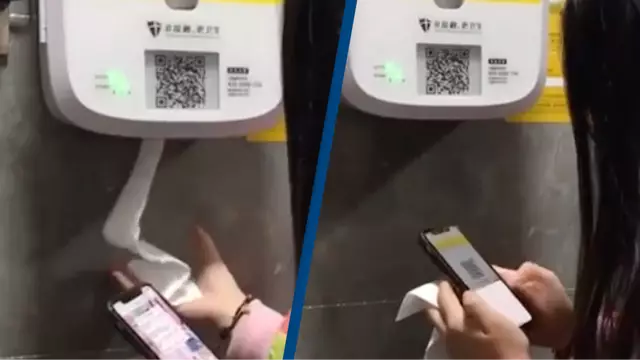
The intersection of technology, consumerism, and public amenities has sparked heated debates worldwide, particularly in China, where an innovative, yet dystopian system for distributing toilet paper in public restrooms is causing outrage. In a move that some are calling a real-life "Black Mirror" moment, Chinese authorities have introduced a public restroom system that requires users to watch a 30-second advertisement before they can access toilet paper. The controversy has ignited passionate online discussions, drawing comparisons to the chilling technology-driven world of the hit show Black Mirror.
In this article, we delve deep into the mechanics of this new system, its societal implications, and the global reaction to what many are calling an intrusive and unsettling innovation in public amenities.
China has always been known for its rapid technological advancements, particularly in the integration of technology into everyday life. However, the latest innovation within the realm of public facilities—specifically toilets—has raised eyebrows across the globe. The system in question involves a toilet paper dispenser equipped with a QR code that must be scanned by the user. Upon scanning, the user is required to watch a 30-second advertisement before being granted access to a set amount of toilet paper.
The device is straightforward in its design: a QR code is placed on the toilet paper dispenser, which users must scan using their smartphones. Once the ad plays, the system dispenses a predetermined number of toilet paper squares. The catch, however, is that users who require more toilet paper are forced to either endure another advertisement or pay a small fee (roughly 6 cents) to bypass the ad and access more paper. This model, according to Chinese authorities, is intended to reduce waste by limiting the amount of paper given to each user.
To fully understand the rationale behind this system, it's important to consider the broader cultural and logistical context in which it has been introduced. Public toilets in China are notorious for not providing toilet paper, particularly in older or less-developed areas. In many public restrooms, users are expected to carry their own toilet paper or purchase it from nearby vendors.
A Historical Lack of Paper in Public Restrooms
This lack of toilet paper is not an anomaly. In fact, it is quite common for travelers and locals alike to carry their own tissue packs while navigating public spaces in China. The problem lies in the limitations of the country's sanitation infrastructure, which in many cases cannot accommodate large-scale toilet paper dispensers due to plumbing constraints. As a result, the government has implemented a system where toilet paper is treated as a commodity, available only to those who either scan the QR code, watch an advertisement, or pay a small fee.
In the context of this longstanding practice, the new ad-based system may be seen as an improvement in certain urban areas where public toilet paper was once scarce.
While the idea of watching an advertisement to access a basic human necessity such as toilet paper may seem absurd to many, the system has ignited a firestorm of criticism online. Reddit users, in particular, have expressed outrage at the thought of having to engage with a commercial simply to obtain a sanitary product. In fact, some have drawn direct comparisons to the dystopian world of Black Mirror, where everyday objects and experiences are commodified to an extreme degree.
On Reddit, the response has been overwhelmingly negative, with users voicing their frustration about the system. One user commented, "This would last about 5 seconds in America before it got smashed and the paper was just forcefully taken out." Another user added, "I would smash it on principle, and I'm pretty sure I have a key on my keyring capable of opening it."
The most vocal criticisms, however, stem from the perceived violation of privacy and the sense of "surveillance capitalism" that the system evokes. By forcing users to scan a QR code and watch an advertisement before gaining access to basic services, many feel that they are being coerced into engaging with invasive marketing tactics in the most private of spaces.
Many commenters on Reddit and other online forums have likened the system to scenes from Black Mirror, a show known for its portrayal of dark, technology-driven futures. In particular, the ad-based toilet paper dispenser is seen as an unsettling metaphor for the increasing commercialization of even the most intimate aspects of human life.
Despite the negative reactions, some individuals have pointed out that this system is merely a reflection of China's ongoing efforts to integrate technology into every facet of life, including basic services like restroom usage. However, for many, the intrusion of ads into such a private and vulnerable moment represents a step too far.
While the public outcry over the ad-based toilet paper dispenser has been intense, there are certain economic and environmental aspects to this innovation that merit further exploration. The introduction of this system can be viewed as part of China's broader efforts to address issues of waste management and sustainability.
One of the primary goals behind this ad-based model is to curb wastefulness. Chinese authorities have long been concerned about the amount of toilet paper that is taken by individuals in public restrooms, especially in larger cities where high volumes of people use public toilets daily. By linking access to paper with a commercial or a payment, authorities hope to limit the amount of tissue that users take, ultimately reducing waste and cutting costs.
The integration of technology into everyday services is a growing trend, and China's adoption of this ad-based system reflects a larger shift towards monetizing public infrastructure. Whether this model will be effective in the long term remains to be seen. However, it opens up a broader conversation about the role of advertising and technology in shaping public amenities. Is it ethical to use ads as a mechanism to control access to basic needs like toilet paper?
While the public toilet system in China is a product of its unique cultural and infrastructural challenges, the question remains: could this system be replicated in other parts of the world?
In Western countries, the reaction to such a system would likely be much more extreme. The United States, for example, has a long history of consumer rights and privacy protection. The idea of forcing people to watch ads for essential items would likely be met with legal challenges and widespread backlash.
Moreover, public attitudes towards privacy are generally more stringent in these regions, and the idea of being surveilled while using a public restroom may be perceived as an unwarranted invasion of privacy. The system's potential for abuse—such as tracking users' movements or personal data—would also be a significant concern.
While the implementation of such a system in the West seems unlikely in the short term, it raises intriguing questions about the future of advertising in public spaces. Could we one day see ads in places like public buses, elevators, or even grocery store aisles? With the rapid growth of digital billboards and interactive displays, it's not entirely outside the realm of possibility.
The introduction of the ad-based toilet paper dispenser in China has sparked an important debate about the role of technology and advertising in our daily lives. While some view the system as a necessary innovation to address toilet paper waste, others see it as an invasion of privacy that blurs the lines between public amenities and commercial exploitation.
As China continues to experiment with integrating technology into everyday life, the world will be watching closely to see how this system evolves. Will it become a model for other countries, or will it remain a controversial outlier in the global landscape of public restrooms?

The ongoing investigation into alleged budget insertions within the Philippine government has captured public attention, particularly the involvement of Senators Joel Villanueva and Jinggoy Estrada. Despite their public denial of any wrongdoing, accusations from former Department of Public Works and Highways (DPWH) assistant district engineer Brice Hernandez have raised serious concerns about the transparency and legality of certain budget allocations. Senate President Pro Tempore Panfilo Lacson’s involvement in the investigation has added another layer of complexity to the unfolding story. This article examines the key details of the probe, the allegations made against the senators, and the larger implications of budget insertions in the Philippines.
At the heart of the controversy are accusations made by Brice Hernandez, who alleged that Senators Joel Villanueva and Jinggoy Estrada were involved in securing substantial amounts for flood control projects in Bulacan in exchange for kickbacks. Hernandez claimed that Villanueva maneuvered to allocate P600 million, while Estrada allegedly pushed for P355 million in funding for the region. In exchange, both senators were accused of demanding a 30-percent cut of the funds.
Both Villanueva and Estrada have vigorously denied the allegations. They have even volunteered to open their bank accounts as a gesture of transparency to prove their innocence. However, the accusations have sparked heated debates, with critics pointing out the irregularities in the budget allocation process, particularly with regard to infrastructure projects.
Senator Panfilo Lacson, the chair of the Senate Blue Ribbon Committee, has played a pivotal role in overseeing the investigation. Lacson has expressed his frustration with Hernandez’s testimony, particularly his “selective memory” on key details. The senator emphasized that while Hernandez’s allegations are concerning, it is essential for him to provide a full and honest account of his involvement in the matter.
During a Senate hearing, Lacson revealed troubling details about the 2023 national budget, including the discovery of seven or eight unprogrammed items totaling P600 million. These allocations were identified as being linked to flood control projects, which further substantiated Hernandez’s claims about the existence of budget insertions. Lacson also pointed out that an additional P355 million in flood-control-related insertions was found in the 2025 national budget, heightening concerns over the long-term implications of such practices.
The allegations have raised critical questions about the accountability of public officials and the transparency of government spending. In a democratic system, the public has the right to expect their elected officials to act with integrity and in the best interests of the people. Budget insertions, particularly those tied to infrastructure projects, can result in misallocated funds, inefficiency, and potential corruption. The ongoing investigation into Villanueva and Estrada highlights the need for greater scrutiny of how public funds are distributed and utilized.
Lacson has made it clear that no one will escape accountability. While some have expressed doubts about the credibility of the investigation, Lacson’s stance remains firm: if the allegations are substantiated, those responsible must face the consequences, regardless of their political standing or position.
A central figure in this investigation is Brice Hernandez, whose testimony has been both pivotal and controversial. Hernandez has alleged that certain individuals, including members of Senator Estrada’s staff, were involved in the kickback scheme. However, Hernandez’s statements have raised questions about his credibility, particularly his inability to provide concrete evidence of any direct transactions between the senators and the alleged kickback recipients.
During the hearing, Hernandez admitted that he could not definitively claim that Mina Jose, a key figure in the case, had delivered kickbacks to Estrada. Instead, he suggested that the payments were made to a “proponent” linked to the projects. This vagueness in Hernandez’s account has led some to question whether his allegations are grounded in fact or if they are part of a broader political maneuver.
Despite these uncertainties, Hernandez’s testimony has sparked a broader discussion about the integrity of the infrastructure projects being funded by the national budget. Critics argue that the lack of clear accountability in such projects makes them ripe for misuse, with funds often being diverted to those with political influence.
The investigation into budget insertions touches on significant legal and political issues. From a legal perspective, if the accusations against Villanueva and Estrada are proven true, they could face serious consequences under Philippine law. Corruption, particularly in the form of accepting kickbacks or manipulating public funds, is a serious offense with severe penalties.
Politically, the case also has the potential to impact the careers of the two senators. The public perception of their involvement in corrupt practices could lead to a loss of trust, which may affect their political future. For Villanueva, who has positioned himself as a reformist, and Estrada, whose political legacy has already been marked by controversies, the outcome of this investigation could shape their careers in the years to come.
The investigation has sparked calls for reforms in the budgeting process, particularly with regard to how infrastructure projects are allocated. Critics argue that the current system is opaque and allows for the manipulation of funds for political gain. To address these concerns, several lawmakers and civil society organizations have called for greater transparency in how public funds are allocated and tracked. They argue that a more robust system of checks and balances is necessary to prevent the misuse of taxpayer money.
One potential reform could involve the introduction of a more detailed and transparent budgeting process, where all proposed projects are publicly disclosed and subject to independent oversight. Additionally, implementing stricter rules around budget amendments and insertions could help to ensure that funds are allocated based on merit and need, rather than political connections.
The investigation into the alleged budget insertions by Senators Villanueva and Estrada is far from over. As more evidence is presented and testimony continues, it is crucial that the inquiry remains transparent and impartial. The public deserves to know whether the senators are guilty of corruption or if they have been unjustly accused. Regardless of the outcome, this case highlights the urgent need for reforms in the budgeting process to ensure that public funds are used effectively and in the best interests of the Filipino people.

In a world often defined by division, it’s rare that we encounter moments where stark contrasts—whether social, economic, or personal—collide in a way that rewrites the narrative of lives. The story of Amara Johnson, a 12-year-old girl, and Richard Coleman, a millionaire real estate tycoon, is one such extraordinary tale. A story that goes beyond chance encounters and speaks deeply to the power of human compassion, courage, and the healing force of connection.
On a flight from Atlanta to New York, most passengers were preoccupied with their phones, the noise of the engines, or simple thoughts about their day. Among them was Amara, a young girl traveling alone after the tragic death of her mother. Her heart weighed heavily, burdened with grief as she journeyed to live with an aunt she barely knew. The circumstances of her journey weren’t of her choosing. Her shoes were worn and her clothes tattered, yet within her heart burned an undeniable strength.
At the front of the plane, in the plush comfort of the first-class section, sat Richard Coleman—a billionaire real estate magnate known for his cold demeanor. His towering empire of skyscrapers had earned him the nickname "The Ice King." But his wealth and success came at the cost of his personal life, leaving him a figure often shrouded in mystery and solitude. He was on his way to a high-stakes meeting with investors that could decide the future of his vast fortune.
But then, an unforeseen emergency shook the plane.
Midway through the flight, Richard Coleman suddenly clutched his chest and collapsed, his body betraying him in the most unexpected of circumstances. Panic erupted across the cabin. The flight attendant’s frantic cry—“Is there a doctor on board?”—was met with a silence that reflected the passengers' growing dread. Amidst this chaos, one small voice rose above the fear and uncertainty.
Amara, though only twelve, stood up with unwavering resolve. In her memory echoed the CPR lessons her mother had taught her in the hope that she could one day save someone’s life. In a blur of action, Amara pushed through the stunned passengers and knelt beside the fallen billionaire.
“Lay him flat,” she commanded, her voice calm but firm despite her own trepidation. She tilted his head, interlaced her fingers, and began performing chest compressions.
One. Two. Three.
The cabin watched in stunned silence as this young girl—who had already endured so much loss—fought to save a life. Her movements were methodical, precise. Time seemed to stretch as the flight attendants rushed to assist, but it was Amara’s steady hands that made the difference. Minutes passed, then Richard gasped. His chest rose again. Slowly, color returned to his face, and the collective sigh of relief from the passengers was audible.
Amara, exhausted and shaking, returned to her seat, her heart still racing. The plane buzzed with whispers of awe: A poor girl had saved a millionaire’s life.
Upon landing in New York, Richard was swiftly taken away by medical personnel. But amidst the chaos, as he was being wheeled out of the airport, his eyes locked onto Amara’s. His lips moved, and though the noise of the airport was overwhelming, Amara caught a glimpse of something profound in his gaze.
She assumed he had simply whispered a quiet “thank you.” But in truth, his words were much more than that.
The next morning, Amara found herself stranded outside LaGuardia Airport. Her aunt, who was supposed to meet her, never arrived. She had no phone, no money, and no way of contacting anyone. She was alone, just a young girl lost in the vast city of New York, with nothing but a faded backpack to hold onto.
Then, in a twist of fate, a black SUV pulled up, and two suited men stepped out, followed by Richard Coleman—pale but very much alive. He walked slowly with a cane, the reality of his near-death experience still lingering in his body.
"You saved my life," he said hoarsely, his eyes filled with a mix of gratitude and something deeper—regret.
Amara, overcome with emotion, lowered her gaze. “I just did what my mom taught me.”
Richard sat down beside her on the cold bench, and for a long moment, the two of them simply sat in silence. It was then that Richard, for the first time in years, spoke of the pain he had buried for so long.
"I should have saved my own daughter... but I didn't. You reminded me of her."
The confession hit Amara like a wave. Richard’s daughter had tragically died years earlier from a drug overdose, a loss that haunted him daily. He had been absent from her life when she needed him the most, and the guilt of that failure was something he carried with him—just as Amara carried the grief of losing her mother.
In that moment, a deep bond formed between the two. The walls that separated their worlds—those of wealth and poverty, success and struggle—began to crumble. In Richard’s pain, Amara found a reflection of her own, and in her compassion, Richard found a path to redemption.
What began as an act of courage on a plane soon evolved into something far more meaningful than either could have anticipated. Richard, deeply moved by the girl who had saved his life, made an unexpected decision.
“You’re not staying out here tonight. Not alone,” he insisted, gesturing to his driver.
With that, Amara’s life took an extraordinary turn. She left behind the cold bench and entered the warmth of Richard’s Manhattan penthouse—a stark contrast to the hardship she had known. For Richard, opening his home to Amara was a way to right the wrongs of his past. For Amara, it was the beginning of a new chapter, where instead of feeling abandoned, she felt seen and loved.
In the following weeks, something remarkable happened. The man once known as “The Ice King” began to thaw. Richard canceled business meetings to attend Amara’s school events. They went to simple diners instead of posh restaurants. He asked her about her dreams, her hopes, and the mother she had lost. He listened in a way that he hadn’t in years, and Amara found herself growing close to a man who was now becoming a father figure—a second chance for both of them.
As their bond deepened, the media began to take notice. Headlines exploded: “Billionaire Lives with Girl Who Saved Him on Flight.” Cameras followed them everywhere, and the public was quick to offer their opinions. Some questioned Richard’s motives, accusing him of using Amara’s story for publicity, while others doubted the authenticity of her account.
Amara, overwhelmed by the attention, broke down one night. "They’ll never believe me. They’ll say I don’t belong."
Richard, ever the protector, knelt beside her. "Let them say what they want. You’re not a headline. You’re my second chance."
And with that promise, Richard took the final steps to ensure that Amara would have a future. When it became clear that her aunt was not coming for her, Richard filed for legal guardianship. Social workers, initially skeptical, couldn’t deny the deep emotional connection between them. Richard wasn’t trying to replace his own lost daughter—he was honoring her memory by becoming the father he had failed to be.
Months later, Amara stood beside Richard at a charity gala for underprivileged children, her simple blue dress contrasting with the luxury surrounding them. In front of the cameras, Richard proudly introduced her as his daughter, and for the first time in years, the public saw Richard Coleman not as the ruthless businessman, but as a man who had been given a second chance at redemption.
Amara had saved more than just a life—she had helped heal a broken soul. And in return, she had found what she needed most: a family, a future, and a love that had the power to heal two wounded hearts.
This story is a poignant reminder of the unexpected ways in which life can change. It speaks not only to the resilience of the human spirit but also to the profound impact that compassion, love, and second chances can have in transforming lives. From tragedy to triumph, it illustrates that sometimes the smallest acts of courage can have the most profound effects.
